

Lake Manyara National Park

Lake Manyara with flamingos and the Rift Valley escarpment in the background
Tanzania, East Africa

Lake Manyara National Park travel guide

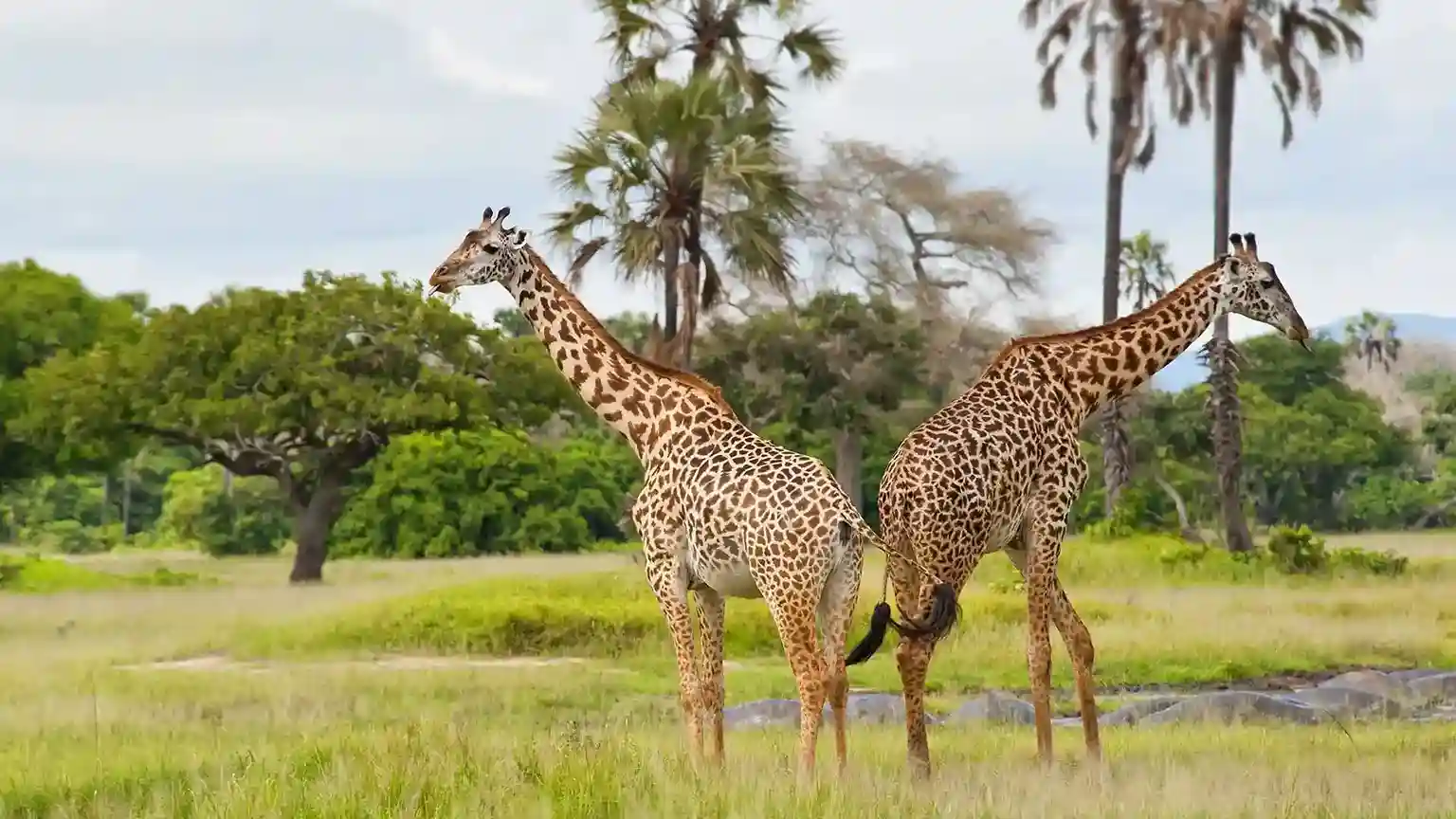
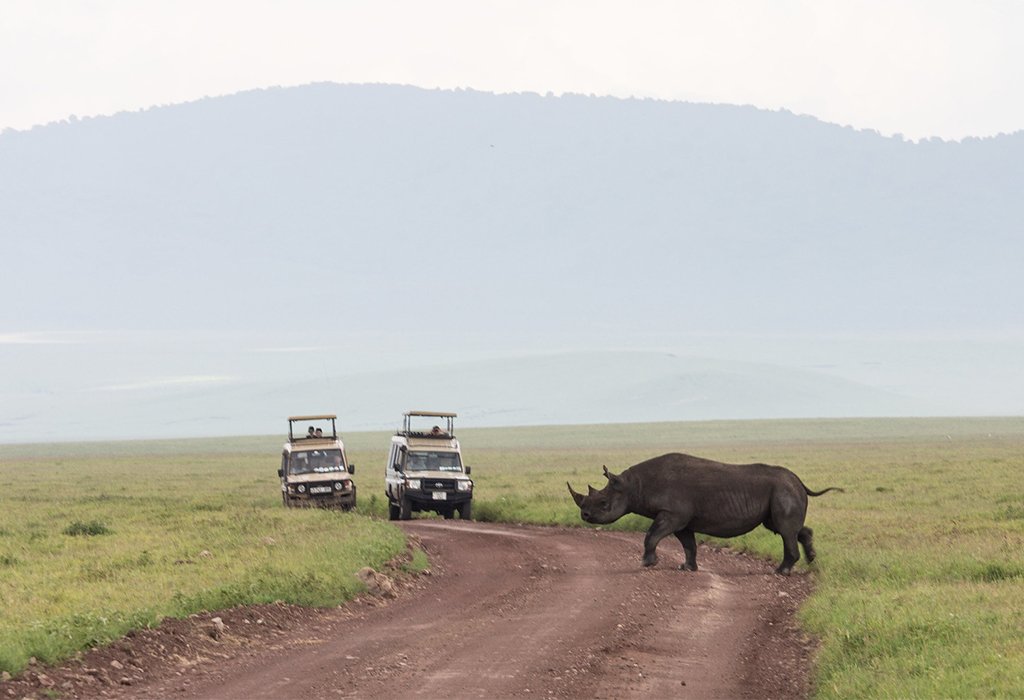
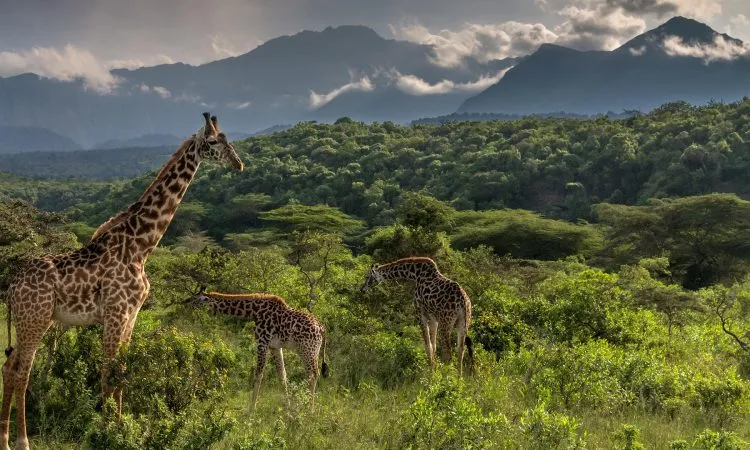
Lake Manyara National Park is a compact park at the base of the Rift Valley escarpment in northern Tanzania, covering 648 square kilometres of which the alkaline Lake Manyara occupies approximately two-thirds. Despite its small land area, the park contains exceptional habitat diversity: groundwater forest fed by springs at the escarpment base, acacia woodland, open floodplain, and the lakeshore itself. It is best known for its population of tree-climbing lions - lions that habitually rest in the branches of acacia and fig trees - and for the flamingo flocks that congregate on the lake when water conditions are suitable. It is usually the first or last stop on a northern circuit itinerary and works well as a half or full-day game drive.

At a Glance

Lake Manyara National Park key facts

LocationNorthern Tanzania, Manyara region
Size648 sq km (lake: approx. 230 sq km)
Established1960 (national park)
Nearest baseArusha (approx. 1.5 hours) or Moshi (approx. 2 hours)
Best time to visitYear-round; flamingos most numerous February to June
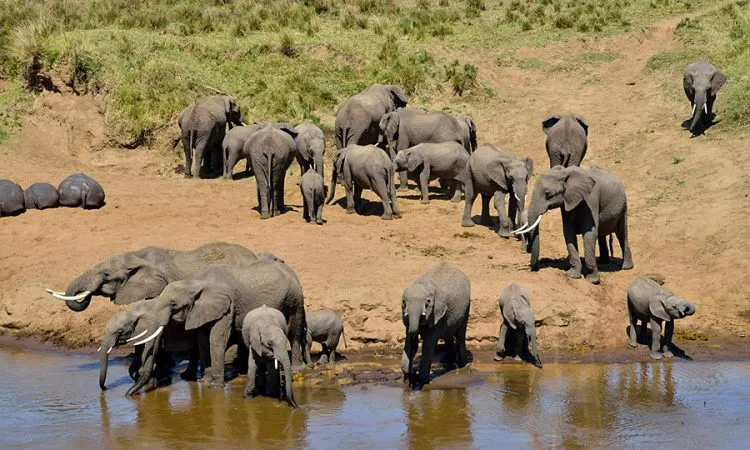
Wildlife highlightsTree-climbing lions, elephant, hippo, flamingo, giraffe, over 400 bird species
What to Know

Lake Manyara National Park highlights

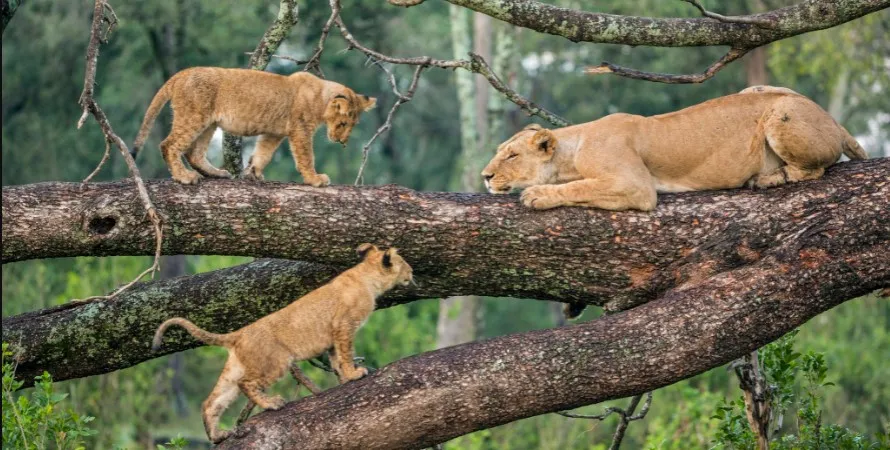
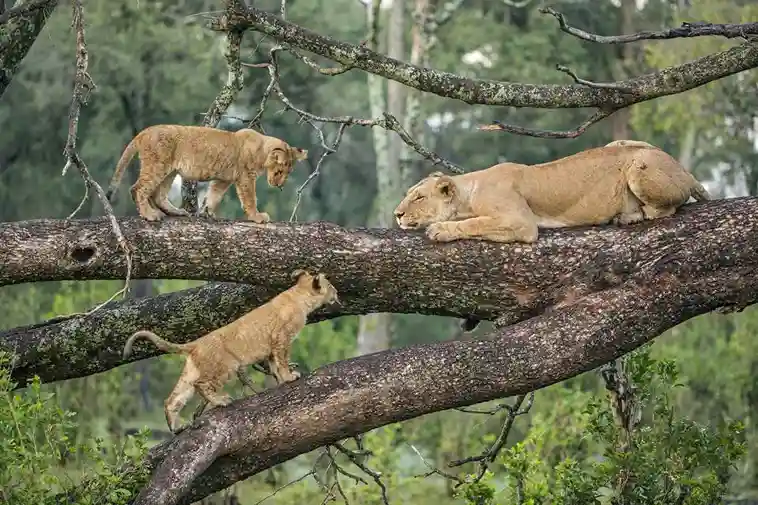
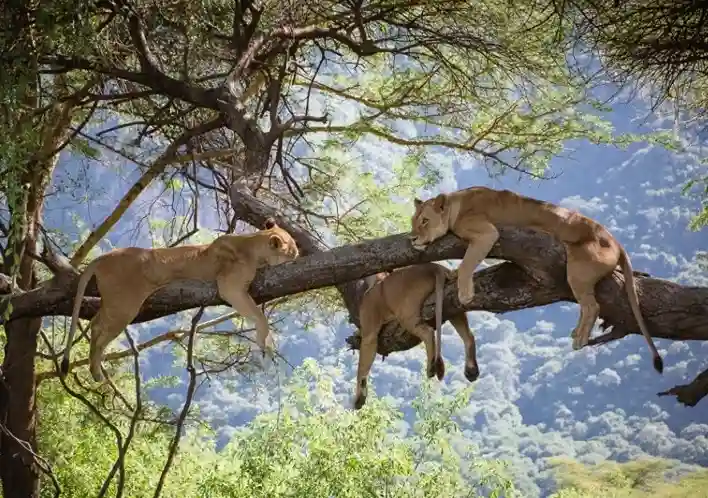
Lions resting in an acacia tree at Lake Manyara National Park

Tree-climbing lions

Lake Manyara is one of the few places in the world where lions habitually climb trees and rest on branches. The behaviour is not fully understood - theories include better airflow away from insects, improved vantage points for spotting prey, or simply a learned habit that spread through local prides. Not all lions in the park climb, and sightings are not guaranteed, but Lake Manyara is consistently the best place in Tanzania to observe this behaviour.
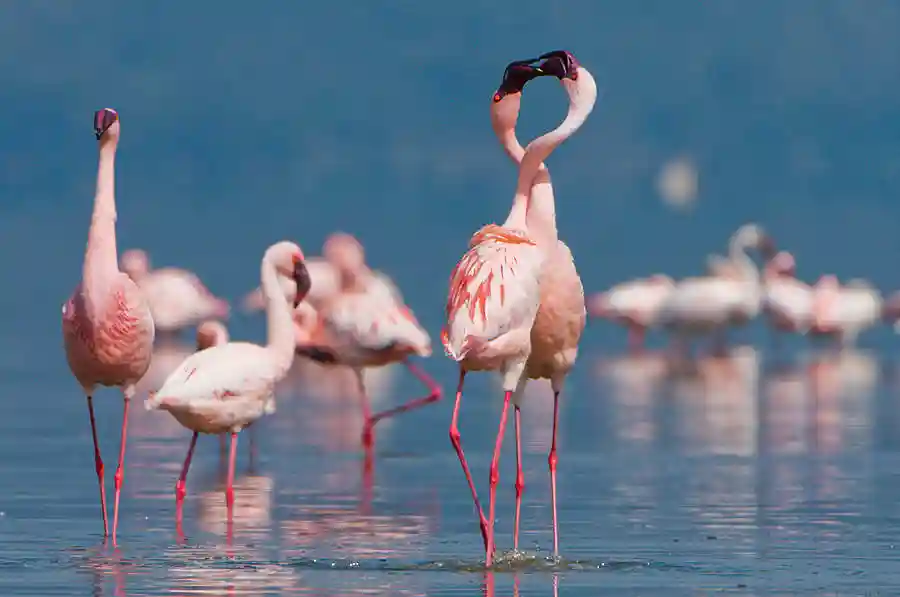
Flamingos on the alkaline lake at Lake Manyara

Flamingos and birdlife

The alkaline lake attracts lesser and greater flamingos when water levels and algae concentrations are suitable - typically between February and June when the lake is neither too full nor too dry. Over 400 bird species have been recorded in the park, making it one of the most bird-diverse parks in Tanzania for its size. The groundwater forest is particularly rich in forest-dependent species.

Hippo pod at Lake Manyara National Park

Hippo pool

The park contains a hippo pool near the park entrance where large numbers of hippos congregate in the shallower sections of the lake margin. It is one of the most reliable hippo sightings in the northern circuit and is often visited early in a game drive before entering the main park loop. Crocodiles are also present in the area.

Ready to visit Lake Manyara National Park?

Tell us when you are travelling and what interests you - we will build the right itinerary around Lake Manyara National Park.

Maluku Global Tours and Safaris

Tanzania tour operator based in Moshi, Kilimanjaro. We arrange safaris, Kilimanjaro climbs, Zanzibar holidays, and day trips.